
How to Read Dog Food Feeding Labels
A simple guide to finding kcal per 100g, understanding feeding guides and using packet information more confidently.
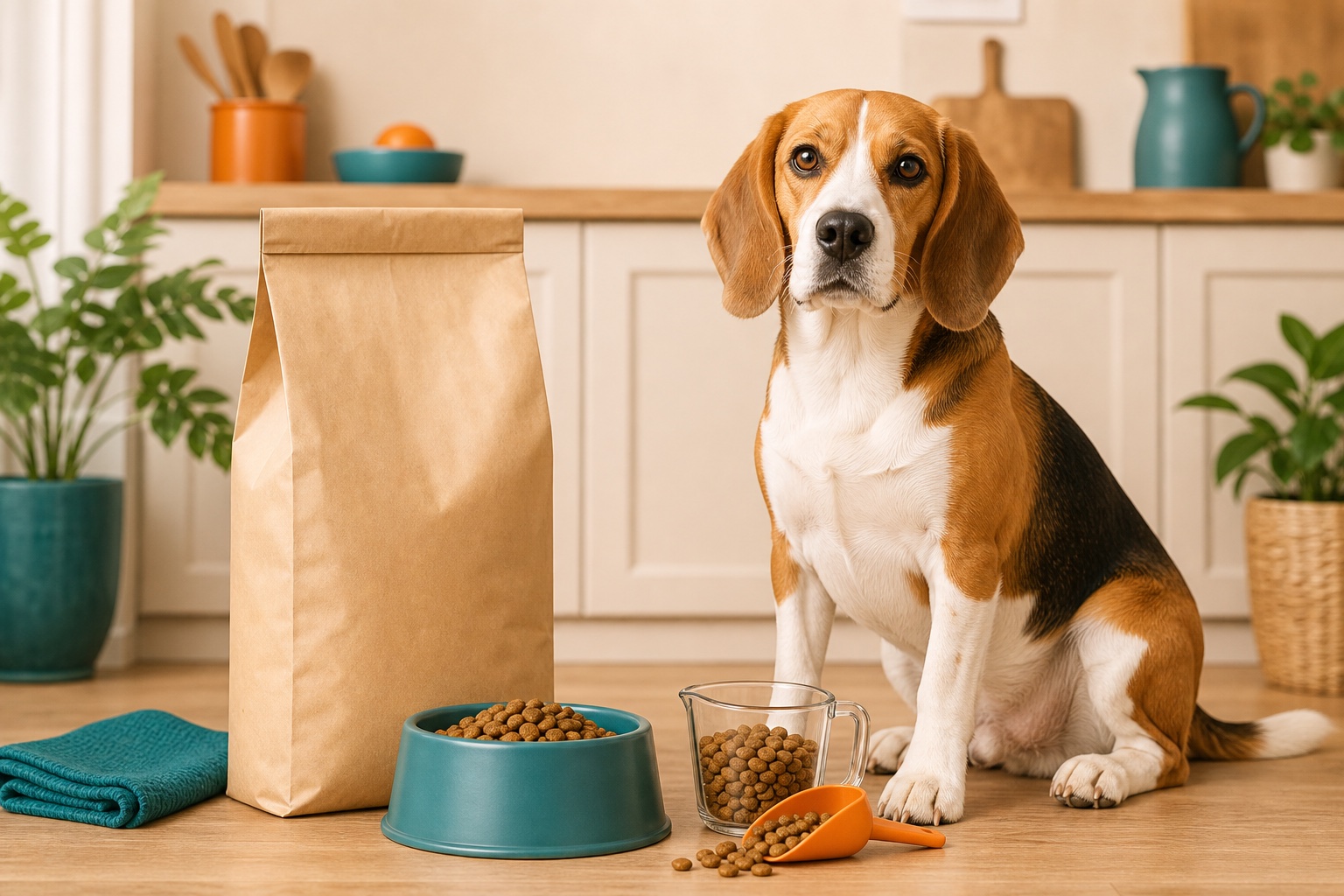
Find the kcal per 100g
The most useful number for a portion estimate is kcal per 100g. It may be listed as metabolisable energy, calorie content or energy value. If it is not on the pack, check the manufacturer website or product data sheet.
Food type changes the grams estimate
Dry food, wet pouches, trays and raw foods can have very different moisture levels. That means the same daily calorie target can look like very different gram amounts.
- Dry kibble is usually more calorie dense per 100g
- Wet foods often contain more moisture and fewer calories per 100g
- Complete raw foods vary by recipe and fat level
- Mixed feeding is best calculated from the products you actually use
Use feeding guides as a starting point
Packet feeding guides are useful, but they are broad estimates. Your dog’s age, body condition, activity, neuter status, treats and routine can all change what works in practice.
Check the full daily intake
Include treats, chews, training food and extras when you think about daily calories. If you use more than one food, calculate each part separately or use the combined kcal per 100g from your own mix.
Related Pawzzles guides
-
Understanding Dog Food Calories
A simple guide to kcal per 100g, food labels and using calorie information more confidently.
-
Dry, Wet or Raw Food: What Changes in the Calculator?
How different food types can change estimated feeding amounts and why packet calories matter.
-
Dog Feeding Calculator
Estimate a starting daily portion for your dog.
Explore Pawzzles
Visit the Pawzzles shop for enrichment toys and dog-friendly play ideas.